
Receiving international client payments is defined as the process of collecting funds from clients in foreign countries through cross-border payment rails, multi-currency accounts, or specialized fintech platforms. Agencies that rely on traditional bank wires pay $25–$50 per transaction in direct fees, plus hidden FX spreads that can consume 1–6% of the total value. The modern alternative is a multi-currency business account with local bank details in currencies like USD, EUR, GBP, and AUD, which routes payments as domestic transfers and cuts both cost and settlement time dramatically. For agencies and freelancers building a global client base, payment infrastructure is not a back-office detail. It directly determines your margins and your ability to win clients abroad.
How agencies receive international client payments today
The standard industry term for what agencies need is a multi-currency business payment account. This is a single account that holds multiple foreign currencies and provides local banking details for each, so a client in Germany pays you via a German IBAN, and a client in the US pays via a US routing number. No SWIFT wire required.

Multi-currency accounts cover 10 or more currencies, including USD, EUR, GBP, and AUD, replacing the correspondent banking chain with a simple domestic transfer. That shift alone removes the 3–5 day settlement window and the per-transaction fees that stack up across a busy agency's invoice cycle.
The main methods agencies use to receive cross-border client payments include:
- Multi-currency accounts with local bank details: Clients pay in their own currency via domestic rails. You receive funds in that currency and hold or convert on your schedule.
- Digital payment platforms: Web-based platforms built for international invoicing accept card payments, ACH, and local payment methods from clients worldwide.
- SWIFT wire transfers: The legacy option. Still widely used, but the most expensive and slowest method available.
- Payment orchestration layers: Advanced setups that route transactions intelligently across multiple rails to find the lowest cost and fastest path for each payment.
Pro Tip: Always invoice in your client's local currency when using a multi-currency account. Clients pay faster when they see a familiar currency and a local bank account number.
The clearest shift in how agencies get paid is the move away from SWIFT and toward local payment rails. SEPA transfers within Europe, for example, settle in seconds at near-zero cost. That is not a marginal improvement. It is a structural change in how cross-border client payments work.
Why do traditional wire transfers create barriers for agencies?
Traditional SWIFT wire transfers create barriers because funds pass through 3–4 correspondent banks before reaching the recipient, and each one deducts undisclosed fees. The agency receiving the payment has no visibility into how much will arrive until it lands in the account.
The direct cost of a SWIFT wire runs $25–$50 per transaction, and that is before intermediary deductions. A client sending $5,000 may trigger $80 or more in combined fees across the chain. That loss comes directly out of the agency's revenue.
"Hidden costs of traditional cross-border transfers can reach 1–6% of the transaction value due to FX spreads and opaque intermediary banking fees. Agencies should switch to transparent platforms offering mid-market exchange rates."
Beyond fees, the timeline creates real operational problems. A 3–5 business day settlement window means agencies carry receivables risk on every international invoice. A client in a different time zone who pays on a Friday may not clear funds until the following Wednesday.
| Method | Typical cost | Settlement time |
|---|---|---|
| SWIFT wire transfer | $25–$50 + intermediary fees | 3–5 business days |
| SEPA (Europe) | Near zero | Near-instant |
| Multi-currency local transfer | Low flat fee or free | Same day or next day |
| Payment orchestration platform | Variable, typically low | Hours to same day |
The FX problem compounds the fee problem. Banks apply their own exchange rate markup on top of the mid-market rate, typically 2–3%, without disclosing it as a separate line item. An agency receiving €10,000 from a European client may lose €200–€300 in the conversion before the money hits their account. Multiply that across 20 invoices per month and the annual cost becomes significant.
The agencies most exposed to these barriers are those using a single domestic bank account and asking international clients to wire funds directly. That setup forces every payment through the full correspondent banking chain with no way to reduce the friction.
How do multi-currency accounts improve agency payment workflows?
Multi-currency accounts improve agency payment workflows by giving you local bank details in each client's currency, so the payment never crosses an international rail at all. The client makes a domestic transfer. You receive it as a local deposit. The correspondent banking chain is bypassed entirely.
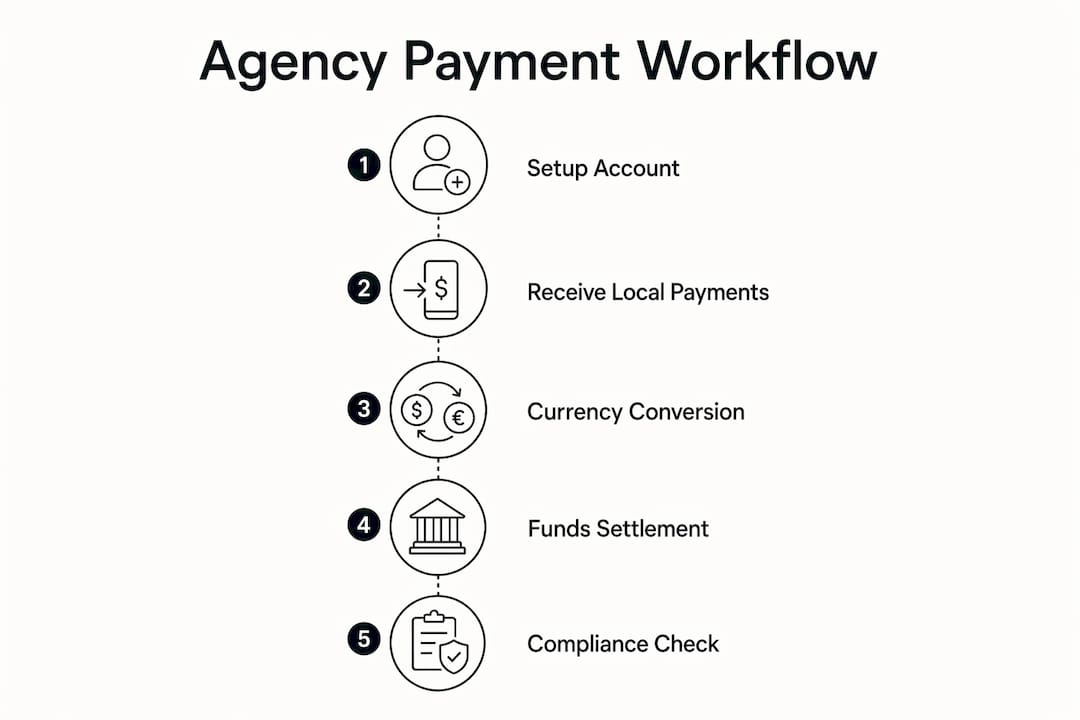
Specialist international payment providers aggregate multiple banking partners to offer wider currency options and tighter FX rates than any single traditional bank can provide. That network effect is what makes the economics work. You get access to mid-market rates and local rails without building those relationships yourself.
The strategic advantage that most agencies miss is currency timing control. When you hold funds in a foreign currency rather than converting immediately, you choose when to exchange. Holding currency in multi-currency accounts lets you convert when rates are favorable instead of accepting whatever rate the bank applies at the moment of receipt. Over a year, that control protects a meaningful portion of your gross margin.
| Approach | Pros | Cons |
|---|---|---|
| Hold foreign currency, convert later | Control over FX timing, potential rate gains | Requires monitoring exchange rates |
| Convert immediately on receipt | Predictable local currency balance | Subject to bank FX markup, no rate flexibility |
Compliance integration is the other major workflow benefit. A multi-currency account for agencies built for international business connects payment receipt with tax documentation, invoicing records, and FX reporting in one place. That reduces the manual reconciliation work that typically falls on the agency's finance team.
Pro Tip: Before opening a multi-currency account, check whether it supports the specific currencies your top five clients use. Coverage varies significantly between providers, and gaps in currency support force you back onto SWIFT for those payments.
What best practices should agencies adopt for international payments?
Agencies that manage foreign payments well share a few consistent practices. The first is collecting tax documentation before the first invoice goes out. Integrating tax form collection with client onboarding, including W-8BEN and W-9 forms where required, prevents payment holds caused by compliance failures. A payment stuck in a compliance review is just as damaging as a delayed wire.
Here is a practical workflow for agencies receiving payments from international clients:
- Open a multi-currency business account with local bank details in the currencies your clients use most. USD, EUR, and GBP cover the majority of global agency revenue.
- Update your invoice template to include the local bank details for the client's currency. Remove SWIFT instructions as the default option.
- Collect tax documentation during onboarding. Send W-8BEN or W-9 forms before the engagement starts, not after the first invoice is disputed.
- Set a currency conversion policy. Decide in advance whether you convert weekly, monthly, or when rates hit a target threshold. Avoid ad hoc conversions driven by cash flow pressure.
- Monitor FX rates with a rate alert tool. Most multi-currency platforms include this feature. Set alerts for your key currency pairs so you convert at a rate that protects your margin.
- Reconcile payments against invoices in the original currency. This keeps your accounting clean and makes tax reporting straightforward at year end.
Payment infrastructure is a strategic business constraint for agencies, not just a finance function. Agencies that treat it as a back-office task consistently lose margin to fees and FX spreads that a better setup would eliminate. The agencies growing fastest internationally have standardized their payment stack the same way they standardize their project management tools.
The final practice is choosing platforms that show you the full cost of a transaction before it settles. Transparent fee structures and mid-market FX rates are now standard on modern platforms. If your current setup does not show you the exchange rate applied and the fees charged on every transaction, you are operating blind.
Key Takeaways
Agencies that replace SWIFT wire transfers with multi-currency accounts and local payment rails reduce transaction costs, cut settlement times, and gain direct control over currency conversion timing.
| Point | Details |
|---|---|
| Use local bank details | Multi-currency accounts provide local IBANs and routing numbers, removing SWIFT fees entirely. |
| Control FX timing | Holding foreign currency lets you convert at favorable rates instead of accepting bank markups. |
| Collect tax docs early | Gathering W-8BEN and W-9 forms during onboarding prevents compliance holds on payments. |
| Avoid correspondent chains | Funds passing through 3–4 banks lose undisclosed fees at each step. |
| Choose transparent platforms | Platforms showing mid-market rates and itemized fees protect your margin on every transaction. |
What I've learned about agency payment infrastructure after years of watching firms get it wrong
Most agencies treat international payment setup as a one-time task they handle when the first foreign client signs. That is the wrong frame entirely. Payment infrastructure is a recurring cost center that compounds quietly in the background, and most agencies have no idea how much it is taking from them.
The agencies I've seen struggle most are the ones that ask clients to "just wire the funds." That instruction sends the payment through the full correspondent banking chain, and the agency receives whatever is left after 3–4 banks take their cut. The client paid the full invoice amount. The agency received less. Nobody flagged it as a problem because the shortfall was never visible on a single transaction.
The margin protection argument for multi-currency accounts is stronger than most agencies realize. A 2–3% FX markup on every international invoice is not a rounding error. For an agency billing $500,000 per year in foreign currency, that is $10,000–$15,000 in avoidable losses. That money funds a junior hire, a tool stack upgrade, or simply stays in the business.
The agencies that grow internationally fastest are the ones that made payment infrastructure a deliberate decision, not a default. They picked a platform with local bank details, set a currency conversion policy, and stopped treating FX as something that just happens to them.
— Ahmed
How Sigmaplatinum supports agencies with international client payments
Agencies that need a purpose-built solution for cross-border client payments will find Sigmaplatinum worth a close look. The platform provides multi-currency business payment accounts with local banking details across major currencies, so your clients pay via domestic transfers and you receive funds without the correspondent banking chain eating into your revenue.
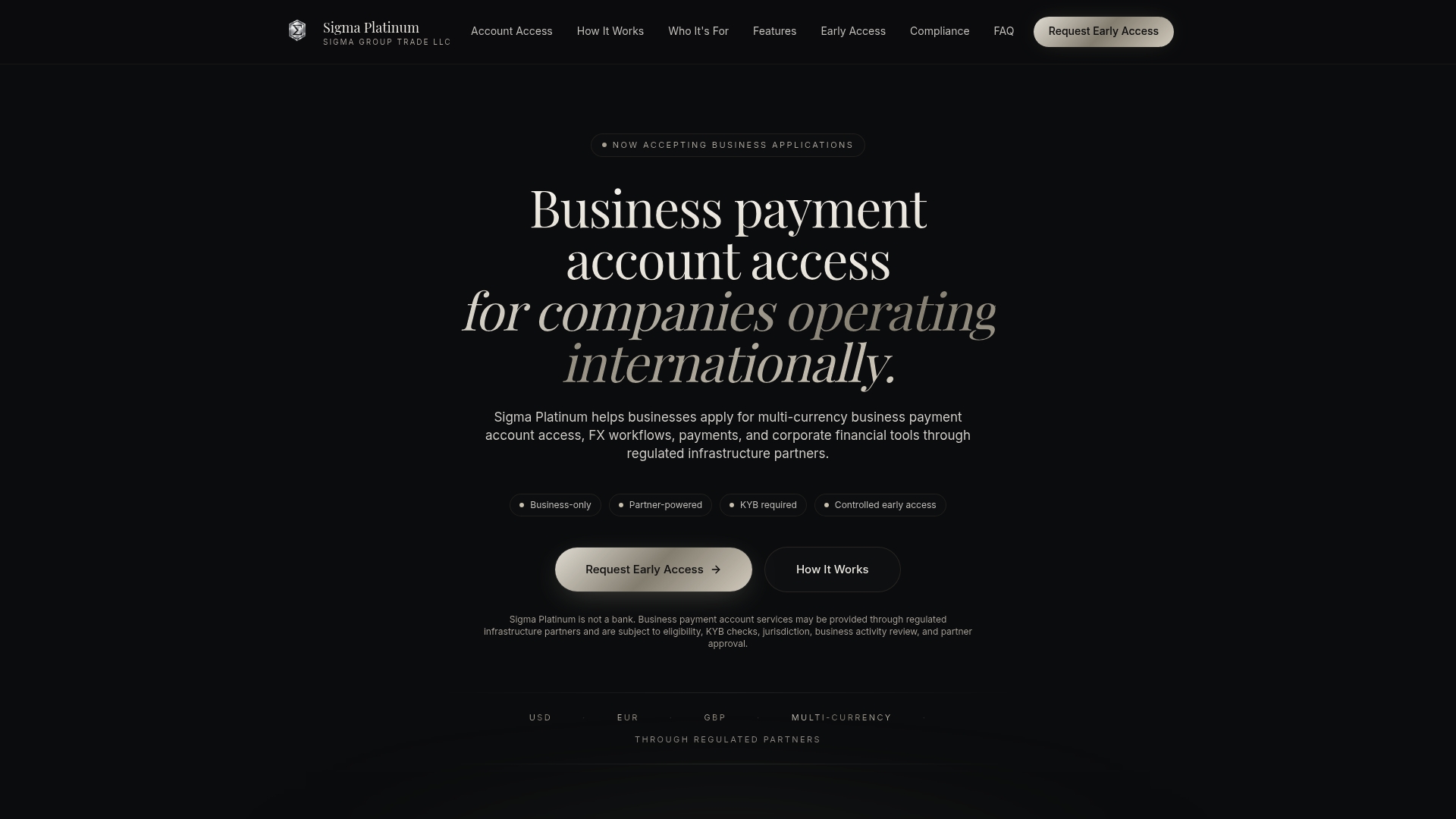
Sigmaplatinum's compliance-focused onboarding includes rigorous KYB checks and partner evaluations, which means the account you open is built for legitimate international business from day one. The platform supports FX workflows and multi-currency management through regulated partners, giving agencies the transparency and control that traditional banks do not offer. If you are ready to stop losing margin to opaque wire fees and bank FX markups, explore Sigmaplatinum's business payment accounts and see what a purpose-built international payment setup looks like for agencies.
FAQ
What is the cheapest way for agencies to receive international payments?
Multi-currency accounts with local bank details are the lowest-cost option. They route payments as domestic transfers, avoiding SWIFT fees of $25–$50 per transaction and bank FX markups of 2–3%.
How long does it take to receive an international client payment?
Settlement time depends on the method. SWIFT wires take 3–5 business days, while local payment rails like SEPA settle in seconds. Multi-currency accounts using local rails typically clear same day or next day.
Why do agencies lose money on international wire transfers?
Funds pass through 3–4 correspondent banks, each deducting undisclosed fees. Banks also apply FX markups of 2–3% on currency conversion, and these costs are rarely visible on a single transaction statement.
Do agencies need to collect tax forms from international clients?
Collecting W-8BEN or W-9 forms during client onboarding prevents compliance holds that delay payment settlement. Integrating tax documentation with your payment workflow removes this as a recurring friction point.
What currencies should an agency's multi-currency account support?
USD, EUR, and GBP cover the majority of global agency billing. Adding AUD, CAD, and SGD covers most remaining markets. Check that your account supports the specific currencies your top clients use before committing to a platform.